
• Home
  • Consortium
  • About the Project
  • Formation
  • Living Labs
  • Home
  • Consortium
  • About the Project
  • Formation
  • Living Labs

Living Labs

Water Oriented Living Labs (WOLLs)

WOLLs provide a field lab to develop, test, and validate a combination of solutions that include technologies and their integration.

Water Oriented Living Labs (WOLLs) are real-life, water-oriented demo and platform-type environments with a cross-sector nexus approach, involving and committing multiple stakeholders.
In INOWASIA, six WOLLs will be co-created and implemented by each Southeast Asian Partner. These living labs will be used for formation, research, and demonstration, and, at the same time, they will be a meeting point for students, academics, and companies to exchange experiences and knowledge.
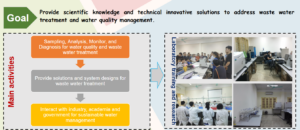
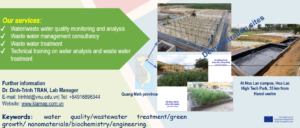
LL1: Water Quality & Treatment for Green Growth (HUS - VNU) Vietnam

HANOI UNIVERSITY OF SCIENCE AND TECHNOLOGY (HUS-VNU) - Vietnam

VNU’s WOLL will focus on Water / Wastewater Quality analysis and Wastewater treatment (in lab and onsite).

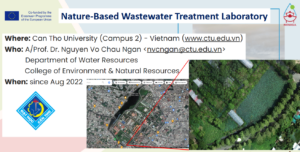
LL2: Natural-Based Wastewater Treatment (CTU) Vietnam

CAN THO UNIVERSITY (CTU) - Vietnam

The Mekong Delta is facing intense environmental threats due to extensive aquaculture cultivation, high urbanization, and industrialization activities.

Low-cost technologies for Wastewater Treatment, such as lagoons or constructed wetlands, are needed.

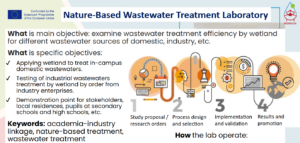
The Can Tho nature-based Wastewater treatment Living Lab will examine the wastewater treatment efficiency in various wastewater sources (domestic, industry, husbandry, etc.) by using Wetland technology.

Activities: Wastewater Quality Testing Education, Wastewater Treatment Research, demonstration point, etc.


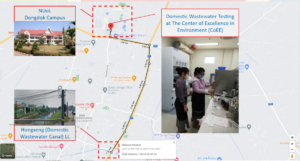
LL3: Domestic Wastewater Quality Education (NUOL) Laos

Domestic Wastewater Solution Education - National University of Laos

To develop innovative solutions for domestic wastewater management.

  1. To educate young researchers on wastewater quality testing professions in Lab.
  2. To demonstrate a remote sensing system for online monitoring domestic wastewater quality.
  3. To co-create the collaboration among all stakeholders on domestic wastewater management.

Domestic Wastewater, Living Lab, Co-creative and Innovative Solution

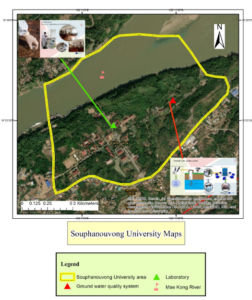
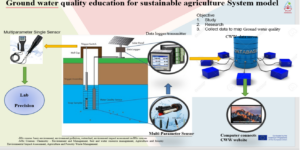
LL4: Groundwater Quality Education for Sustainable Agriculture (SU) Laos

Groundwater quality education for sustainable agriculture - Souphanouvong University

To create a water reference space for  expertise, education and research in Northern Laos focusing on groundwater:

-> quality analysis for agriculture 
-> quality for drinking water and water supply

water quality, groundwater, water supply, agriculture, sustainability

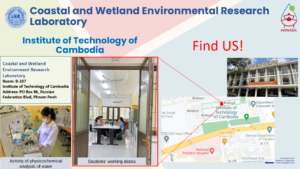
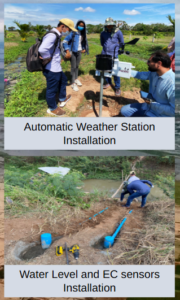
LL5: Coastal and Wetland Environment Research Laboratory (ITC) Cambodia

Coastal and Wetland Environmental Research Laboratory  - Institute of Technology of Cambodia

Coastal and Wetland Environment Research Laboratory aims to assess and manage water resources and environment in the coast and wetland in Cambodia.

Specific Objectives:

  • Investigate the hydrologic characteristic of surface water, groundwater, marine environment, and their interactions
  • Assess the emerging environmental threat due to anthropogenic and natural system in the coastal and wetland environment
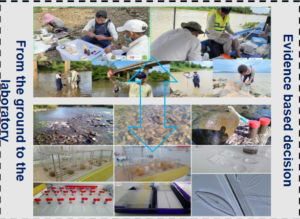
  • Integrate the research activity in the laboratory and on the field


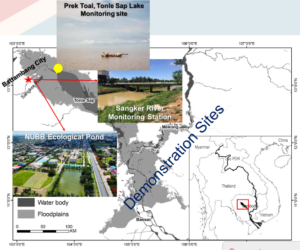
LL6: ECOHEALTH-Ecosystem Health Laboratory (NUBB) Cambodia

Ecosystem Health Laboratory (EcoHealth) - NATIONAL UNIVERSITY OF BATTAMBANG[NUBB] CAMBODIA

EcoHealth Lab is established to provide scientific knowledge and technical innovative solutions to address the ecological health of freshwater ecosystems (rivers, lakes, ponds) impacted by anthropogenic activities.

Monitor, diagnose, report and make recommendations on managing the quality of surface water (rivers, lakes and reservoirs) against natural and anthropogenic stressors

Quantify the ecosystem health status of rivers and lakes and propose management scenario

Interact with stakeholders, academia and government for sustainable water governance

Funded by the European Union. Views and opinions expressed are however those of the author(s) only and do not necessarily reflect those of the European Union or the European Education and Culture Executive Agency (EACEA). Neither the European Union nor EACEA can be held responsible for them.

Copyright © 2025 Inowasia